
Table of contents
10 Top Healthcare App Development Companies in India | 2026

Written by
Blaze Team

Reviewed by
Nanxi Liu
Expert Verified
10 Best Healthcare App Development Companies in India: At a Glance
| Company Name | App Types | Ideal Users |
|---|---|---|
| TCS | Enterprise EHR, analytics, hospital platforms | Large hospital networks, payers |
| Dev Technosys | Telemedicine apps, HIPAA mobile apps | Health startups, nontechnical founders |
| Wipro | Cloud healthcare platforms, legacy modernization | Large healthcare enterprises |
| HCLTech | Clinical data systems, workflow platforms | Hospital networks, health systems |
| Persistent Systems | Digital health products, FHIR integrations | Digital health product teams |
| Appinventiv | Telemedicine apps, patient engagement apps | Healthtech startups, hospitals |
| Brainvire | AI triage, monitoring, workflow tools | Providers adding AI workflows |
| Chetu | EHR customization, billing integrations | Healthcare vendors needing developers |
| Experion Technologies | Patient apps, digital health platforms | Healthcare product teams |
| Radixweb | Custom hospital systems, patient portals | Hospitals, clinics, medtech firms |
I spent weeks reviewing 25 Indian healthcare app development companies. These 10 stood out for delivery reliability and fit across startup, mid-market, and enterprise healthcare organizations.
How I Evaluated These Indian Healthcare App Development Companies
I started with a list of 25 healthcare app development companies in India and spent weeks analyzing case studies, client portfolios, and reviews to pick 10. Here's what I looked for:
- Compliance handling in practice: I looked for proof of healthcare data standards experience (HL7/FHIR) and strong security practices in case studies, project notes, and client feedback.
- Post-launch maintenance structure: I researched what clients said about support contracts and how easily teams could modify or extend features.
- Team integration model: I checked whether vendors assign dedicated engineers to a project or rotate staff as needed.
- Cost predictability: Indian companies often offer cheaper healthcare app development services than their Western counterparts. I reviewed public pricing pages, compared Clutch project ranges, and requested sample estimates from several vendors.
- Healthcare domain depth: I compared how vendors planned healthcare projects, including EHR integrations and patient data use.
Before choosing a healthcare app development company in India, check that the vendor understands healthcare regulations and matches your team’s technical capacity. This helps avoid delays during legal and compliance review.
1. Tata Consultancy Services (TCS): Best for Enterprise Healthcare Platforms
What they do: Tata Consultancy Services helps large hospitals, clinics, and healthcare providers create healthcare platforms at scale.
Who they serve: Health organizations running multi-state operations with legacy infrastructure slowing clinical workflows down.
I reviewed Tata Consultancy Services (TCS) healthcare case materials. The company specializes in developing and maintaining large applications over multi-year periods, which makes them a good fit for large companies. But teams needing simple builds will find the overhead expensive.
Key Features
- EHR and claims integration: Connects clinical and billing systems through pre-built healthcare frameworks.
- Population health analytics: Deploys data pipelines across large patient cohorts.
- Regulatory compliance engineering: Embeds HL7 FHIR, ICD-10, and payer requirements directly into the development lifecycle.
Pros
✅ Deep hyperscaler partnerships: AWS, Azure, and GCP integrations reduce cloud adjustment time so your app can deploy quickly.
✅ Long-term delivery continuity: Long-term account teams keep project knowledge consistent across upgrades and different stages of the system.
✅ Data integration tools: Offers healthcare tools that help organizations connect and use large amounts of health data, including systems that bring together EHR, claims, and clinical data in one place.
Cons
❌ Not for SMBs: The company appeals mainly to large clients, with pricing that doesn’t suit smaller organizations.
❌ Complexity and lead time: TCS uses large, structured processes that can mean longer sales cycles, more coordination, and slower decisions, which can be too complex for simple apps or small pilot projects.
What Real Users Say
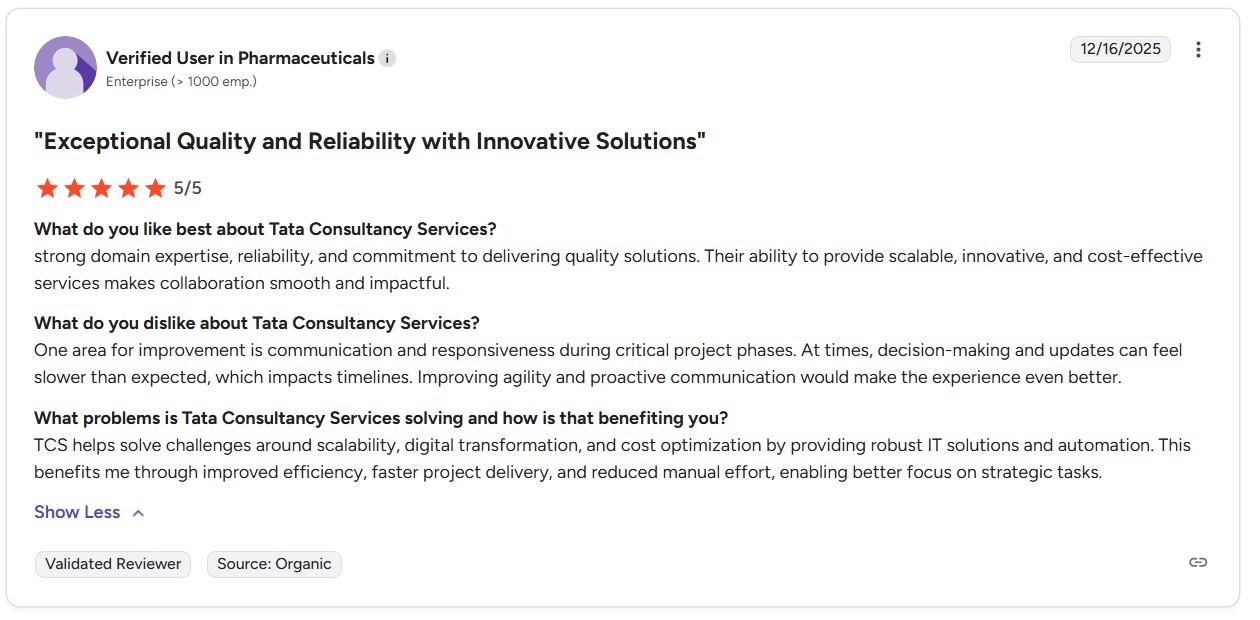
Pro: “[Tata offers] strong domain expertise, reliability, and commitment to delivering quality solutions. Their ability to provide scalable, innovative, and cost-effective services makes collaboration smooth and impactful.” - User in the Pharmaceutical industry, G2
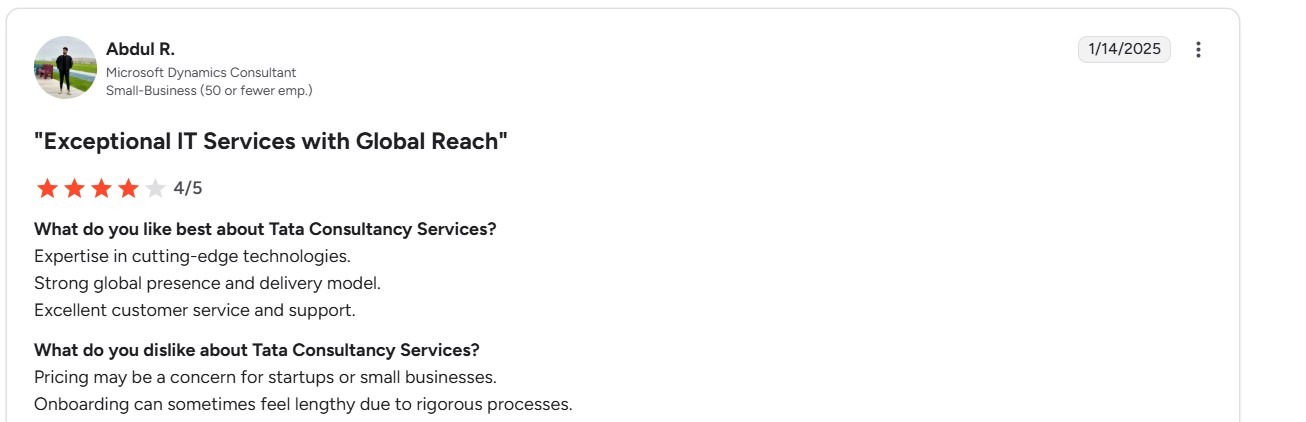
Con: “Pricing may be a concern for startups or small businesses. Onboarding can sometimes feel lengthy due to rigorous processes.” - Abdul R., G2
Bottom Line
TCS works best for large health systems or payers that need a long-term development partner to handle complex regulations, large systems, and major infrastructure. If you run an SMB, choose Appinventiv or Brainvire.
2. Dev Technosys: Best for Custom Healthcare App Development
What they do: Dev Technosys offers development services for organizations needing HIPAA-compliant healthcare apps.
Who they serve: Founders and product leads carrying active development backlogs with no internal engineering team.
I assessed Dev Technosys’s capabilities to launch apps in under 6 months. Although they showed great expertise in telehealth and EHR development, companies that need to launch across multiple sites quickly may find this model slower. This is because Dev Technosys often takes more time for planning, approvals, and change requests before the development begins.
Key Features
- Telemedicine module development: Delivers video consultation infrastructure with scheduling, consent, and storage built in.
- Cross-platform mobile apps: Produce iOS and Android apps from a shared codebase, reducing post-launch maintenance overhead.
- Dedicated teams: Assigns fixed engineers per project, eliminating context-switching across accounts.
Pros
✅ Compliant builds: Projects can include HIPAA-level security features and supporting documents, which can make legal and security reviews easier.
✅ Deep healthcare domain knowledge: Engineers have experience with healthcare apps, which can help cut revision cycles on regulated features.
✅ Telehealth and healthcare focus: Dev Technosys specializes in telehealth and EHR apps.
Cons
❌ Not suited for small projects: Extra planning steps add weeks that fast-moving startups can’t afford.
❌ Potential mismatch for some enterprise integrations: Complex projects across large systems or multiple countries may still need bigger global firms with deeper enterprise experience.
What Real Users Say
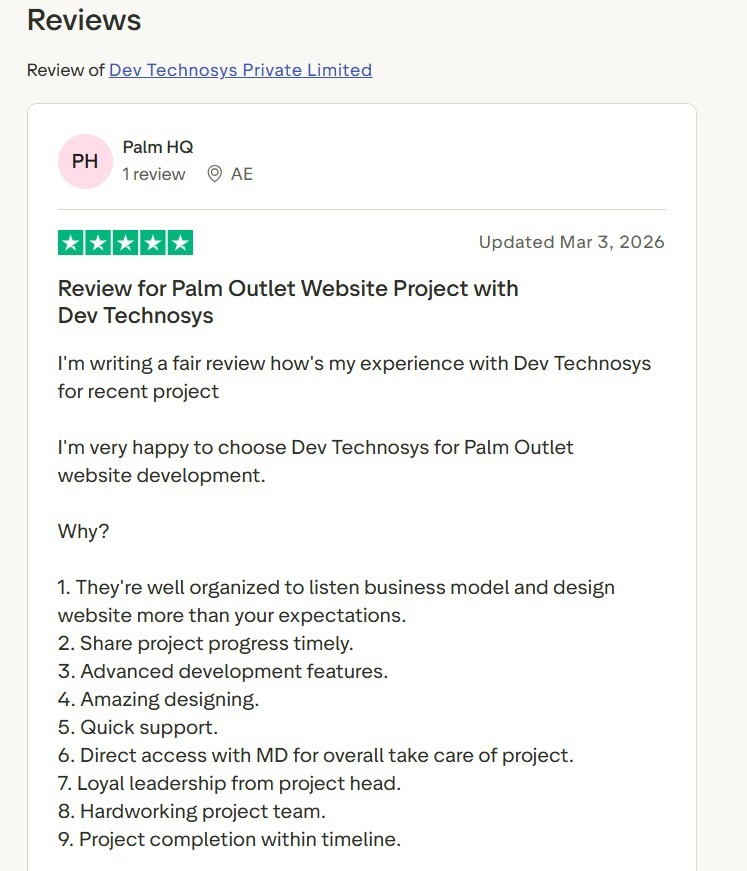
Pro: “They're well organized to listen [to your] business model and design [your] website more than your expectations.” - Palm HQ, Trustpilot
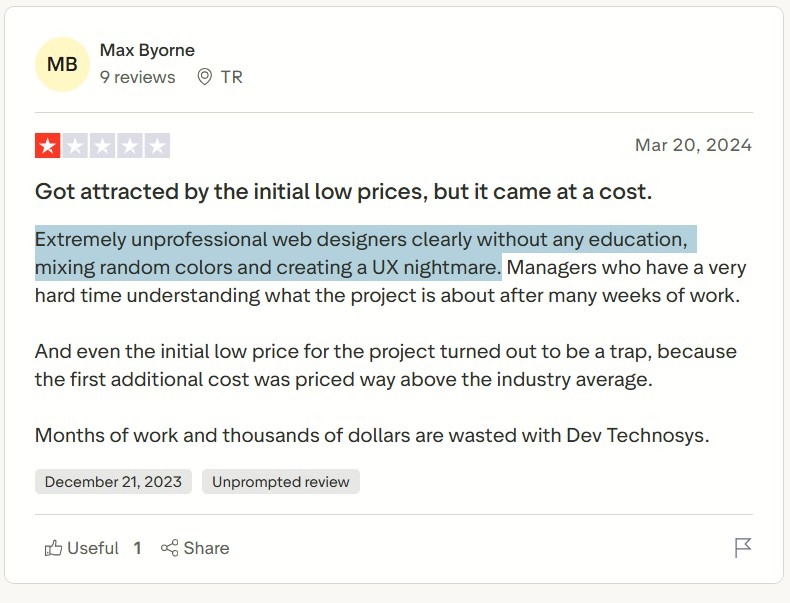
Con: “Extremely unprofessional web designers clearly without any education, mixing random colors and creating a UX nightmare.” - Max Byonre, Trustpilot
Bottom Line
Dev Technosys works well for healthcare products that need HIPAA-ready systems and EHR integration built in from the start. If you need a company that offers a shorter build timeline, try Appinventiv.
3. Wipro: Best for Multi-Region Healthcare App Delivery and Support
What they do: Wipro provides custom healthcare application development, handling design, development, integration, and ongoing product maintenance.
Who they serve: Large companies that run operations in several regions.
I evaluated how well Wipro suited a telehealth startup. Their proposal included program managers, compliance teams, and a steering group. That showed me Wipro works better for healthcare organizations that need oversight across multiple stakeholders, but it adds complexity that might slow down a small startup.
Key Features
- Legacy system modernization: Migrates aging health IT infrastructure to the cloud without disrupting active clinical operations.
- Managed healthcare IT services: Operates ongoing platform maintenance so internal teams focus on product, not infrastructure.
- Regulatory compliance frameworks: Applies HIPAA, HITRUST, and SOC 2 controls at the architecture level, not post-build.
Pros
✅ Enterprise integration depth: Handles multi-system EHR migrations so it can smoothly connect all your software in one place.
✅ Scalability: Offers deployments across large payer and provider networks, so their engineers are comfortable with large-scale projects.
✅ Connects healthcare systems and data: Wipro builds tools that follow FHIR and other healthcare data standards. These tools help connect EHRs and clinical systems while keeping data secure and compliant.
Cons
❌ Minimum viable engagement size: Smaller contracts don't access the senior delivery talent visible in published case studies.
❌ Layered decision-making: Wipro uses structured management and approval processes, which can mean more meetings and slower changes. Smaller companies may find it harder to move fast and test ideas.
What Real Users Say
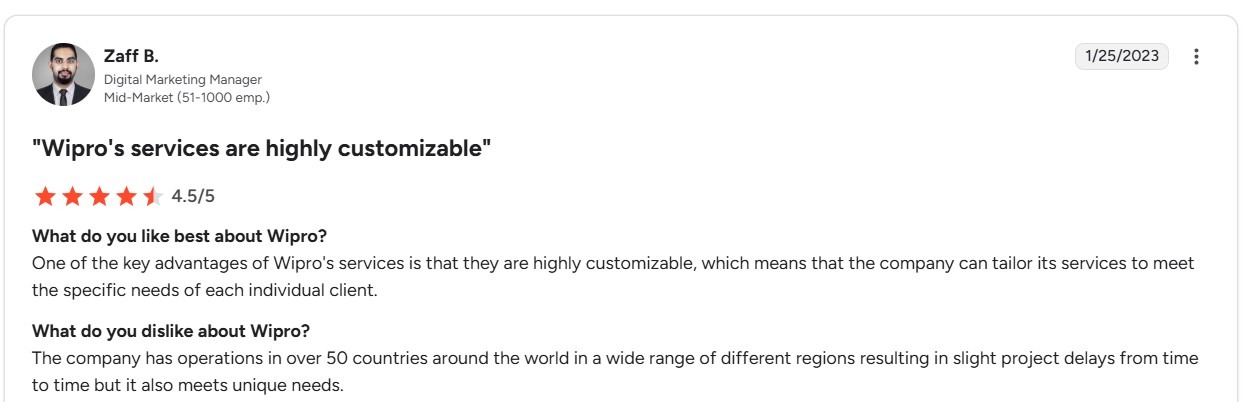
Pro: “One of the key advantages of Wipro's services is that they are highly customizable, which means that the company can tailor its services to meet the specific needs of each individual client.” - Zaf B., G2
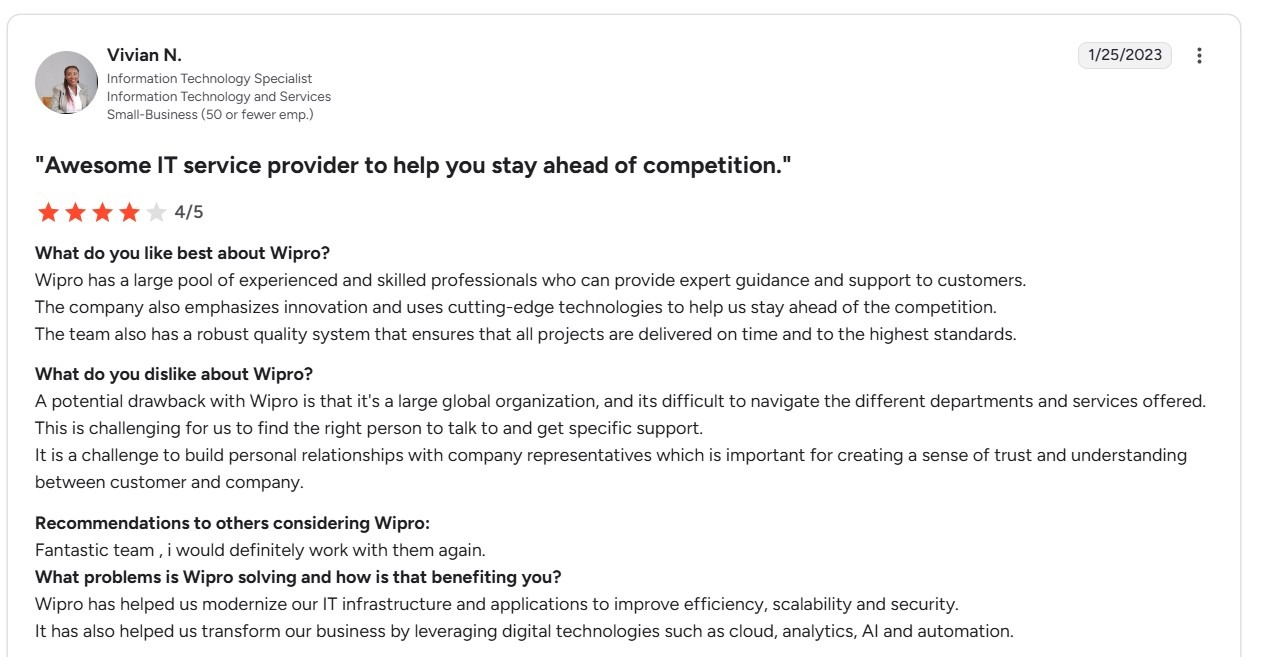
Con: “A potential drawback with Wipro is that it's a large global organization, and it's difficult to navigate the different departments and services offered. It was challenging for us to find the right person to talk to and get specific support.” - Vivian N., G2
Bottom Line
Wipro works best for large health systems or payers that need one partner to handle infrastructure, compliance, and long-term platform support. If speed and fast product updates matter more, Appinventiv offers a simpler development process without the extra enterprise layers.
4. HCLTech: Best for Upgrading Legacy Healthcare Platforms
What they do: HCLTech helps healthcare organizations build clinical and operational systems such as EHRs, analytics tools, and workflow platforms.
Who they serve: HCLTech works with large health systems, hospital networks, and payers that need to upgrade legacy platforms or implement new platforms.
I reviewed HCLTech’s healthcare case studies across payer, provider, and life sciences projects. The company offers system integration and real workflow improvements. This level of detail shows they track operational results, not just project delivery. However, I found that many projects require 3 alignment calls before technical planning even starts, which may be too slow for some teams.
Key Features
- Clinical data platforms: Builds cloud-based healthcare data systems that bring clinical and operational data into one place for better reporting and analysis.
- Legacy system upgrades: Helps healthcare teams move data and workflows off older systems without disrupting care or daily operations.
- Payer-provider data sharing: Uses APIs, FHIR, and cloud tools to connect claims, clinical, and admin data across payers, providers, and partners.
Pros
✅ Healthcare expertise: Works across payer, provider, and life sciences projects without changing teams.
✅ Program management: Manages large projects with many connected tasks over time.
✅ Experience across many healthcare sectors: They work with providers, payers, and life sciences companies.
Cons
❌ Extended sales cycles: Strategic account intake adds lead time that product teams on fixed launch schedules can't absorb.
❌ Too much coordination for small teams: Working with so many groups can slow down their build processes.
What Real Users Say
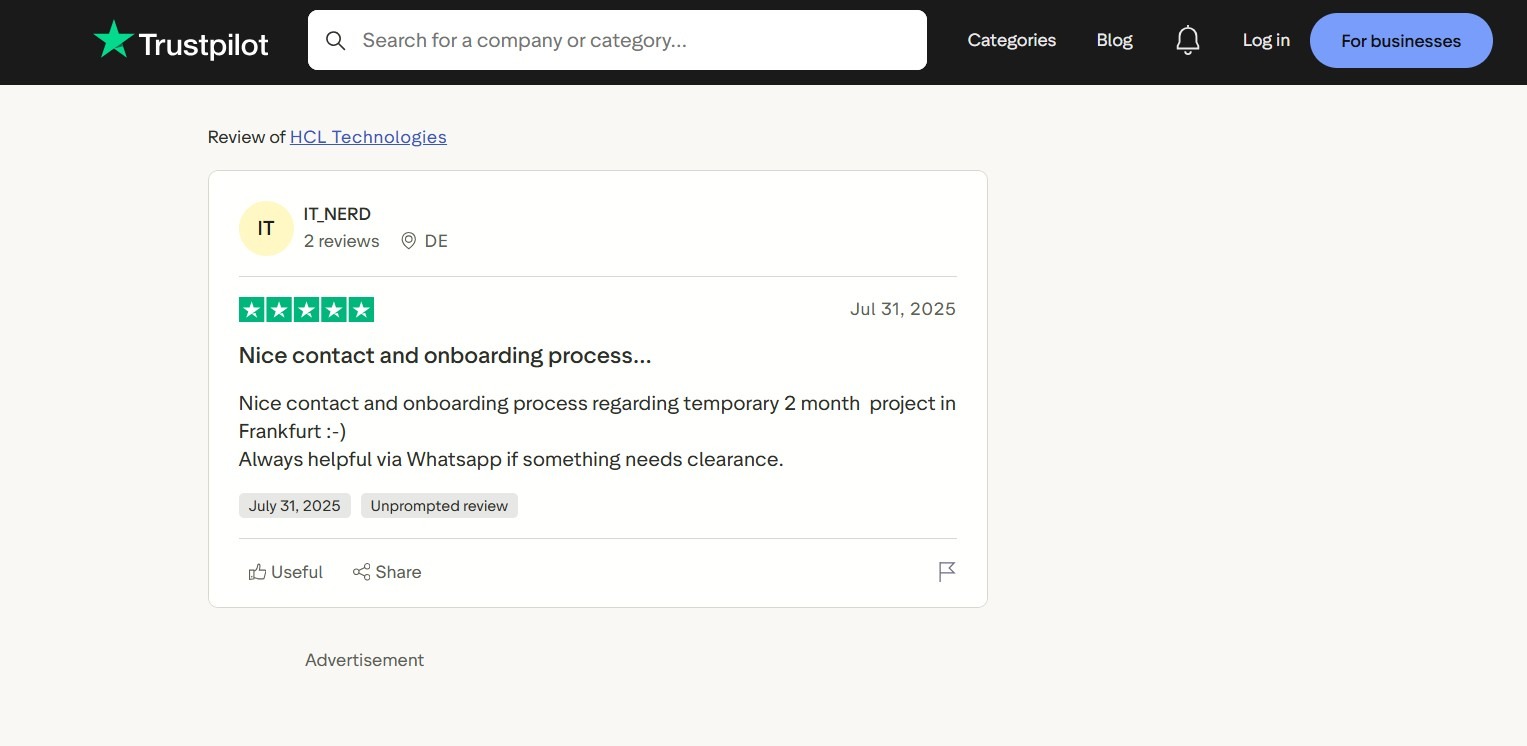
Pro: “Nice contact and onboarding process regarding [a] temporary 2-month project in Frankfurt…Always helpful via WhatsApp if something needs clearance.” - Customer, Trustpilot” Customer, Trustpilot
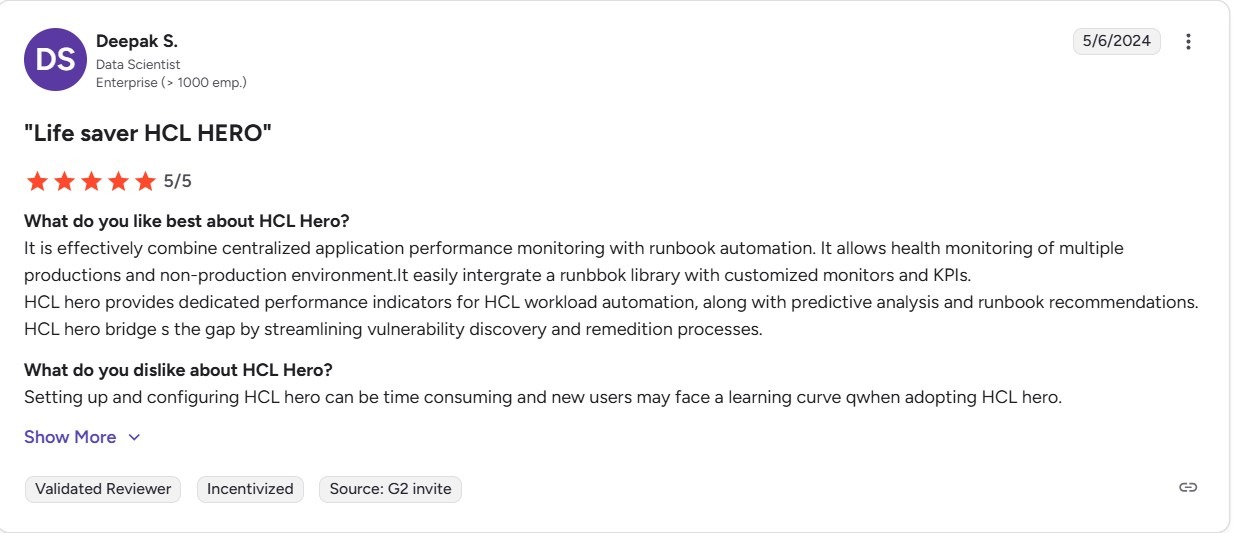
Con: “Setting up and configuring HCL Hero can be time-consuming, and new users may face a learning curve…” - Deepak S., G2
Bottom Line
HCLTech works best for health systems that need help upgrading clinical, operational, and data systems over several years. Teams that want faster product builds may move more quickly with Persistent Systems, which focuses more on engineering and less on large transformation programs.
5. Persistent Systems: Best for Healthcare Product Engineering
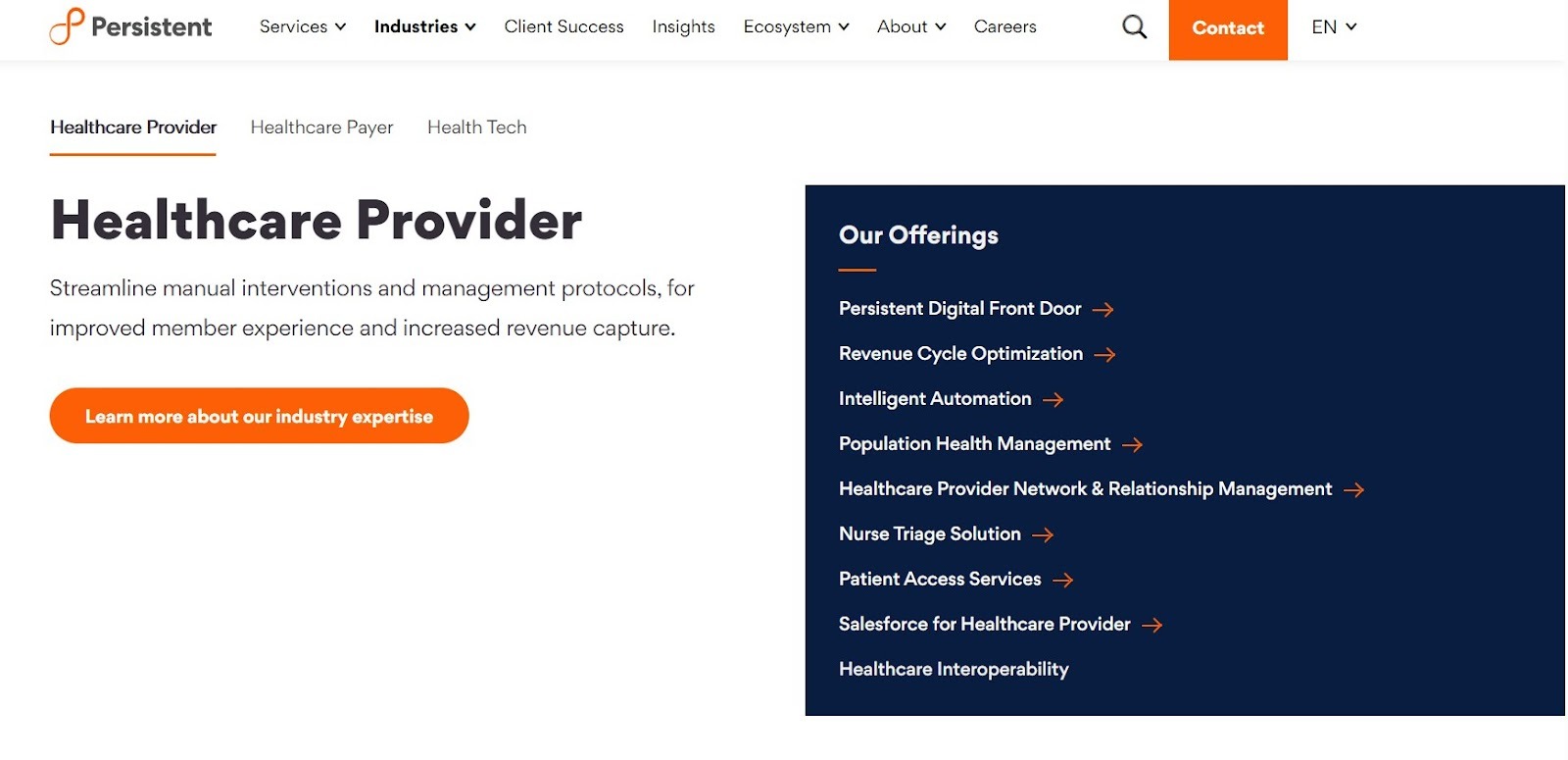
What they do: Persistent Systems builds and improves healthcare software products and platforms. Their work includes new digital health apps, product upgrades, and ongoing engineering support to keep systems running and improving.
Who they serve: Persistent works with digital health companies, providers, payers, and life sciences teams. They often work as a long-term product engineering partner rather than for a single project.
I reviewed Persistent’s healthcare work, focusing on product engineering. They excel at release speed and post-launch performance, which fits businesses that want a partner who plans beyond launch. If you need help with large-scale infrastructure, Persistent may not be the best fit, so confirm what they manage versus what your team handles.
Key Features
- Embedded product engineering: Places dedicated teams inside the client's product org, replacing contractor rotation models.
- FHIR and HL7 integration: Connects health data systems through middleware, reducing the need for custom integration workarounds.
- Regulated support: Builds apps with HIPAA-level security features like audit logs, encryption, and proper documentation.
Pros
✅ Product-focused work: Builds teams and timelines around clear product goals.
✅ Engineering documentation quality: Provides architecture and integration guides that internal teams can manage after the project ends.
✅ Long-term team support: They provide embedded teams that stay with your project over time to help keep work consistent and avoid delays from switching teams.
Cons
❌ Not ideal for early ideas: The team expects a clear product plan, so it may not fit projects still in the discovery stage.
❌ Limited cloud support: Persistent focuses on software but usually doesn’t manage full cloud or DevOps work.
What Real Users Say
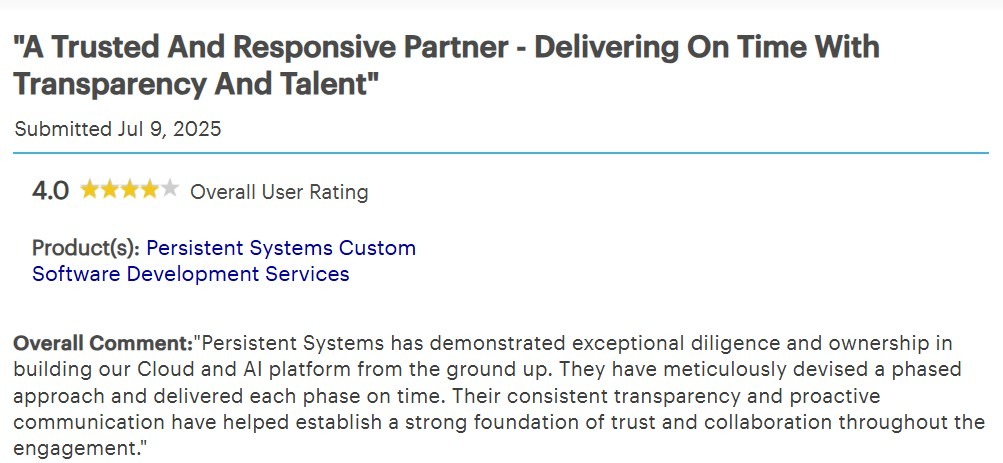
Pro: “Persistent Systems has demonstrated exceptional diligence and ownership in building our Cloud and AI platform from the ground up. They have meticulously devised a phased approach and delivered each phase on time.” - Persistent Client, Gartner
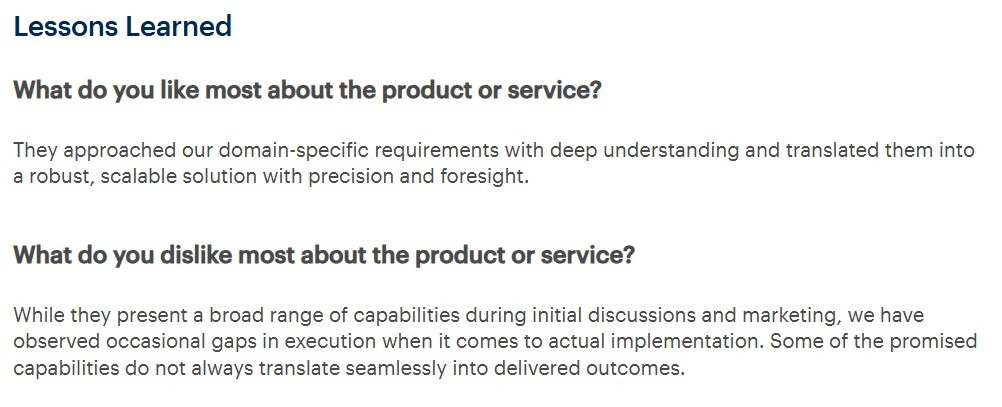
Con: “While they present a broad range of capabilities during initial discussions and marketing, we have observed occasional gaps in execution when it comes to actual implementation. Some of the promised capabilities do not always translate seamlessly into delivered outcomes.” - Persistent Client, Gartner
Bottom Line
Persistent Systems works best when a digital health company needs an engineering team to build and ship a product from a clear roadmap. Choose HCLTech when the project requires coordination across many legacy systems and large teams.
6. Appinventiv: Best for Healthcare Startup Apps
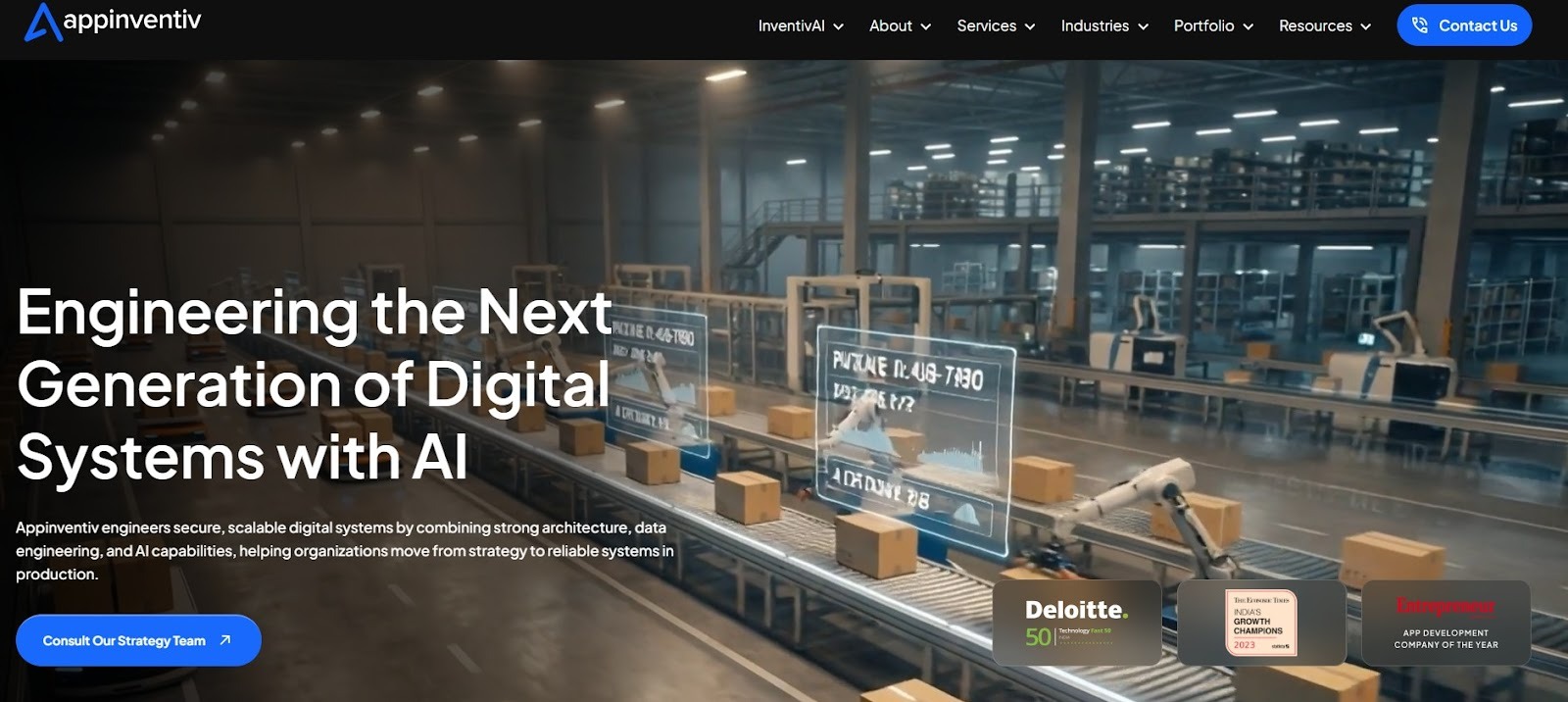
What they do: Appinventiv builds healthcare mobile and web apps, including design, backend systems, and EHR integrations. They also show experience with HL7/FHIR and HIPAA security requirements.
Who they serve: The team works with hospitals, payers, medical device companies, NGOs, and healthtech startups that need help building a startup app or upgrading healthcare apps.
I reviewed Appinventiv healthcare case studies to see how they handle early product builds. Each one listed clear features, platform goals, and results after launch, showing consistency and the ability to create several product types. However, I found that the team uses a simplified API layering for integrations, which might limit full EHR builds.
Key Features
- Phased delivery and reviews: Uses milestone-based delivery with clear demos and checkpoints to manage scope and budget across phases.
- Telemedicine and virtual care apps: Build telemedicine solutions that combine secure video consults, scheduling, e‑prescriptions, and payments into integrated platforms designed to meet healthcare regulations.
- Patient-centered UX and UI: Designs patient- and clinician-facing interfaces using user research and usability testing in healthcare contexts, aiming to align flows with real-world clinical and patient behavior.
Pros
✅ Fast, structured planning: Uses clear discovery and planning steps to turn an idea into a defined scope and timeline without long delays.
✅ Clear milestones: Projects run in sprints with regular reviews, so you can track progress and link payments to real results.
✅ Works well with many systems: Their team connects apps, portals, and devices to EHRs using APIs and standard tools. This makes it easier to link different systems together.
Cons
❌ Deep EHR integration needs extra planning: Appinventiv offers EHR integration, but full two-way data exchange usually requires additional planning.
❌ Less flexibility for custom builds: They rely on standard APIs, which may make it difficult to set up deep, custom EHR integrations.
What Real Users Say
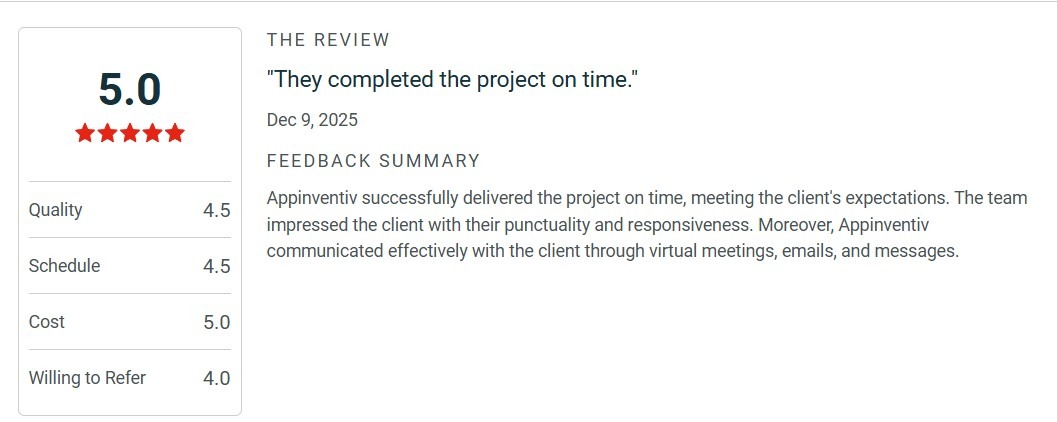
Pros: “Appinventiv successfully delivered the project on time, meeting the client's expectations. The team impressed the client with their punctuality and responsiveness. Moreover, Appinventiv communicated effectively with the client through virtual meetings, emails, and messages.” - Anonymous user, G2
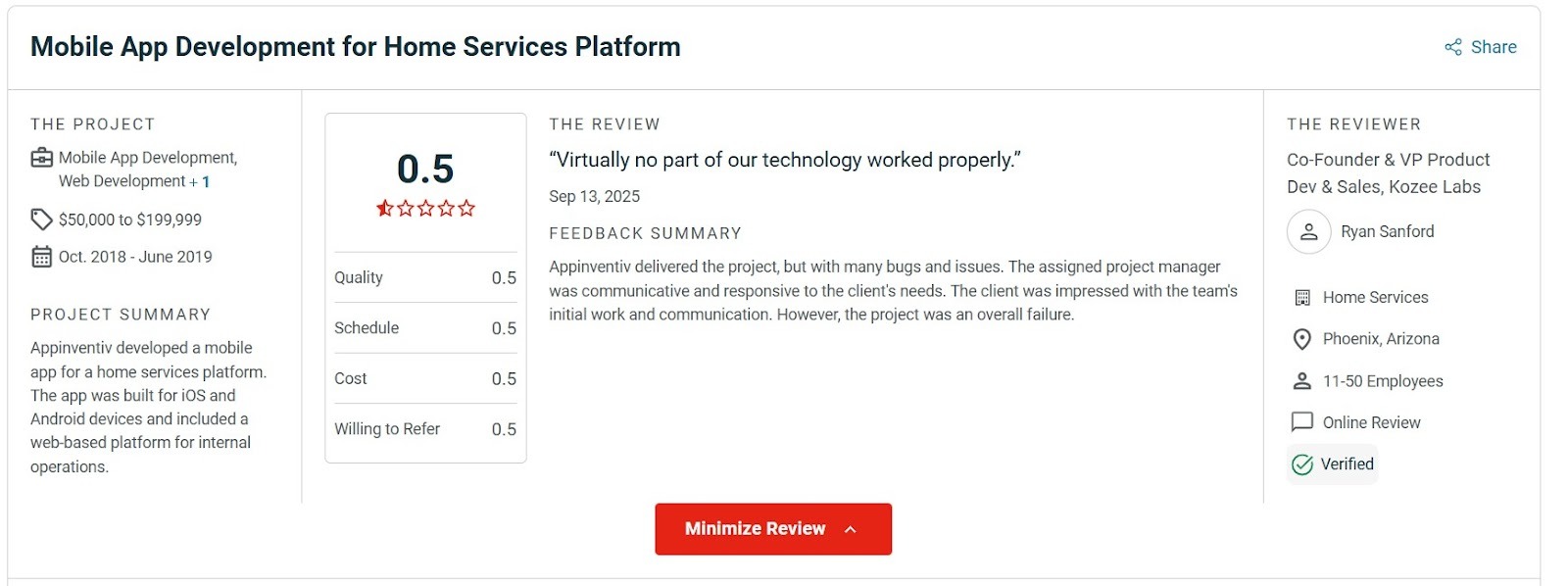
Cons: “Appinventiv delivered the project, but with many bugs and issues. The assigned project manager was communicative and responsive to the client's needs. The client was impressed with the team's initial work and communication. However, the project was an overall failure.” - Co-Founder & VP Product Dev & Sales, Kozee Labs, Clutch
Bottom Line
Appinventiv works well for funded healthcare teams that need a mobile or web product built within a clear scope and budget. If the project requires complex EHR integrations or connections across many hospital systems, a partner like Persistent Systems or a larger healthcare integrator may be a better fit.
7. Brainvire: Best for AI-Driven Healthcare Applications
What they do: Brainvire builds custom healthcare software and mobile health apps. Their solutions use AI, analytics, and automation to improve tasks like patient triage, remote monitoring, document handling, and daily operations.
Who they serve: The team builds apps for providers, digital health companies, pharmacies, payers, and pharma teams. Many clients handle large volumes of patient data and use Brainvire’s tools to speed up tasks like patient intake, reporting, and workflows.
I reviewed Brainvire’s healthcare case studies to see how they use AI in clinical products. Each project tied AI features to a clear workflow problem instead of focusing only on the technology. These AI features can help providers finish workflows faster. But some projects focused on building new AI modules instead of updating legacy systems, which may limit some operations.
Key Features
- AI workflow support: Adds AI alerts, automation, and decision tools to portals, apps, and dashboards.
- Compliance-ready systems: Designs healthcare apps that follow HIPAA standards and handle patient data securely.
- AI add-ons for existing platforms: Builds AI modules, patient portals, and automation layers that connect to current healthcare systems without requiring a full rebuild.
Pros
✅ Workflow-focused AI: Brainvire often connects AI features to real workflow problems like reducing manual entry or improving patient engagement.
✅ Technical scoping early in the process: In their case studies and process docs, they focus on planning architecture, data sources, and integrations before development starts, which helps prevent surprises later in the build.
✅ Can handle large amounts of data: The team builds systems that can manage millions of medical records, which works well for large providers and payers.
Cons
❌ Requires stable existing systems: Many AI projects assume the client’s core systems already work well enough to support new features.
❌ Not focused on full legacy rebuilds: Companies that need to fully replace legacy systems may need a broader plan.
What Real Users Say
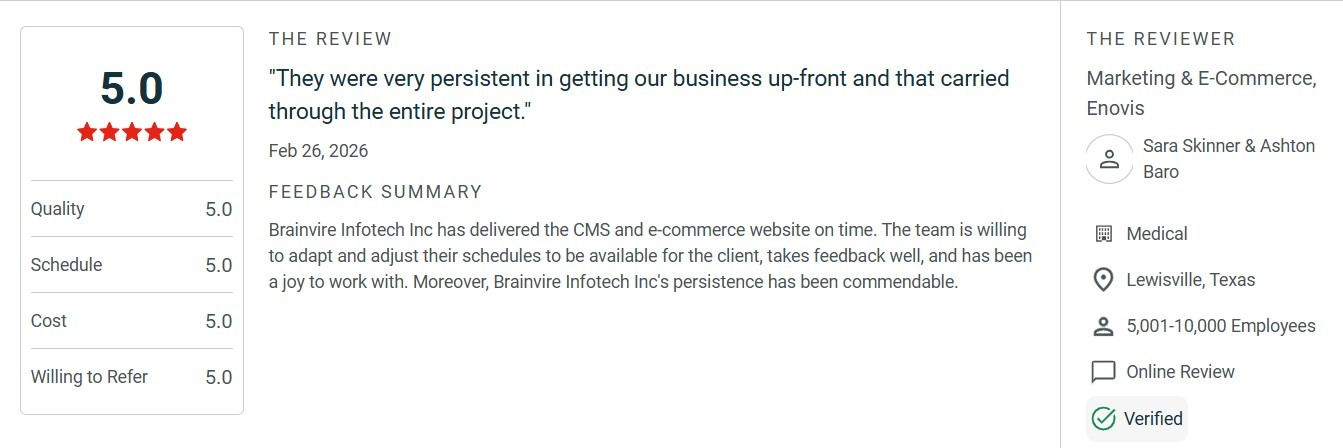
Pros: “They were very persistent in getting our business up-front and that carried through the entire project.” - Sara Skinner & Ashton Baro, Clutch
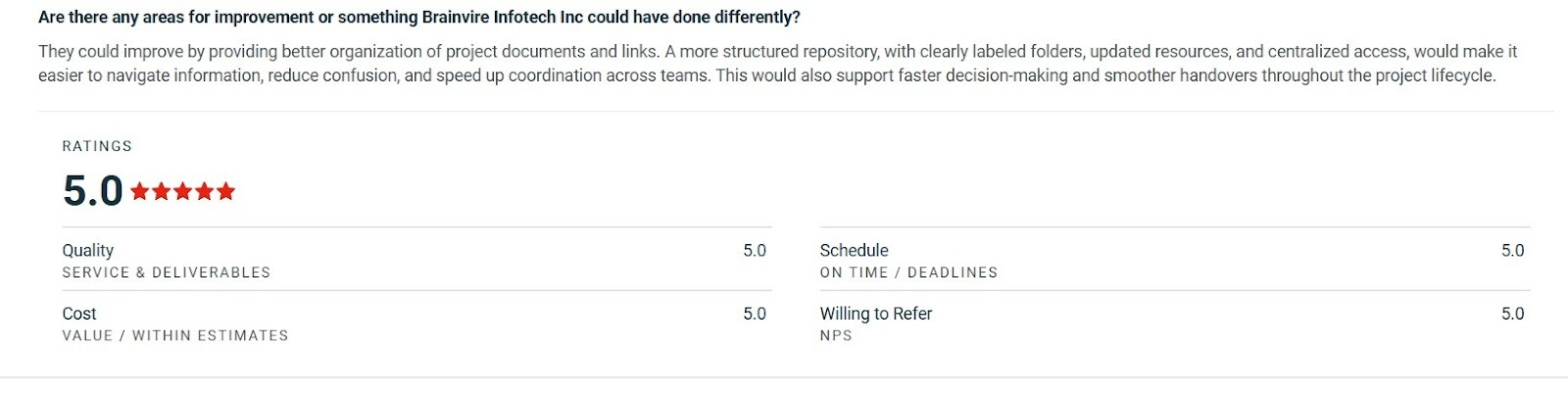
Cons: “They could improve by providing better organization of project documents and links. A more structured repository, with clearly labeled folders, updated resources, and centralized access, would make it easier to navigate information, reduce confusion, and speed up coordination across teams.” - Omar Mihyar, Clutch
Bottom Line
Brainvire works best when a healthcare organization already has core systems and wants to add AI, analytics, or automation to improve specific workflows. If the project also requires a platform upgrade, a partner like Persistent Systems may be a better fit.
8. Chetu: Best for Adding Developers to an In-House Healthcare Team
What they do: Chetu provides custom healthcare software development and IT staff augmentation, offering dedicated developers who work as an extension of the client’s team across EHR/EMR, telehealth, billing, medical devices, and data integration projects.
Who they serve: The team works with healthcare software vendors, providers, payers, and healthtech companies that already have product plans but need extra developers to help build, integrate, or upgrade their systems.
After reviewing Chetu’s healthcare projects, I submitted a request for a developer with HL7 experience for an EHR customization project. Within 48 hours, a developer contacted me, demonstrating a willingness to quickly get to work. The developer said they only work with Chetu-managed teams, which may not fit companies wanting to add their own internal team.
Key Features
- Flexible staffing: Teams can increase or reduce developer support as project needs change.
- Integrated QA support: QA specialists work with developers to test features and support release cycles.
- Long-term team continuity: Supports longer developer assignments so teams keep product knowledge across project phases.
Pros
✅ Fills skill gaps: Adds developers with the exact technical or healthcare experience a team needs to build the right app.
✅ Flexible capacity: Product leaders can scale development support without hiring full-time staff.
✅ Customizable team size: Teams can scale developers up or down based on needs to help keep costs low while handling busy periods.
Cons
❌ Client manages delivery: The client team must handle planning, priorities, and daily coordination.
❌ Extra effort to align processes: Chetu uses its own tools and workflows, which require extra time to match processes and coding standards.
What Real Users Say
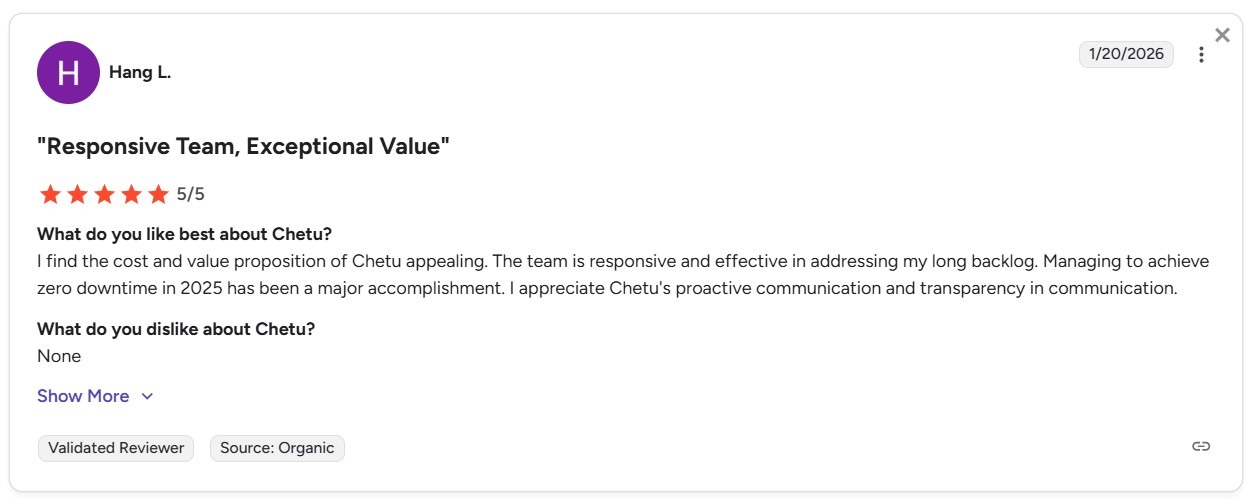
Pro: “I find the cost and value proposition of Chetu appealing. The team is responsive and effective in addressing my long backlog. Managing to achieve zero downtime in 2025 has been a major accomplishment.” - Hang L, G2
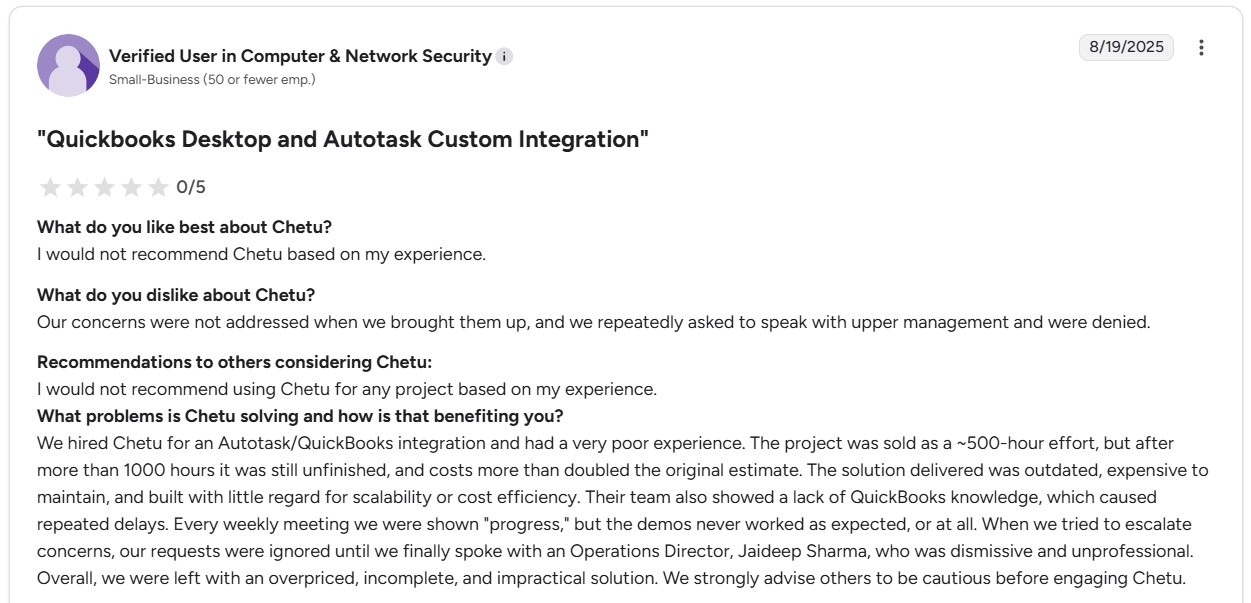
Con: “Our concerns were not addressed when we brought them up, and we repeatedly asked to speak with upper management and were denied.” - Client, G2
Bottom Line
Chetu works best for healthcare companies that already have a clear product roadmap and internal leadership but need extra developers to execute it. Teams that want a vendor to build and deliver the entire product may find a better fit with Appinventiv, which manages the project from planning through launch.
9. Experion Technologies: Best for Integrated Healthcare App Development
What they do: Experion builds digital healthcare products using one team that handles UX design, engineering, and compliance. Their approach focuses on delivering a complete product instead of splitting work across separate vendors.
Who they serve: The team works with healthcare organizations and digital health companies that have clear product goals but struggle to coordinate multiple design and development partners.
I contacted Experion’s team to review projects and see how they approach app design. The sales rep told me the team always starts with a discovery sprint, but didn’t offer a fixed-price prototype option. Companies that want a small, low-commitment test project may find that the entry point is less clear.
Key Features
- Integrated product teams: UX designers, engineers, and QA work together as one team responsible for the full product.
- Connected design and development: UX decisions and development happen in the same workflow instead of separate phases.
- Full-stack healthcare builds: Can build patient apps, backend systems, and secure data storage in one project.
Pros
✅ Single team accountability: Clients work with one team responsible for design, development, and integration.
✅ Integrated product planning: Mobile apps, backend systems, and data security are planned together instead of separately.
✅ Strong system and data support: Their team handles system connections, middleware, and secure data in one place.
Cons
❌ Limited prototype-only entry point: Experion doesn’t market fixed-price prototype packages for very early-stage startups.
❌ Not ideal for small teams: Their full-service model works best for teams with clear goals, so startups may find it too heavy for small test projects.
What Real Users Say
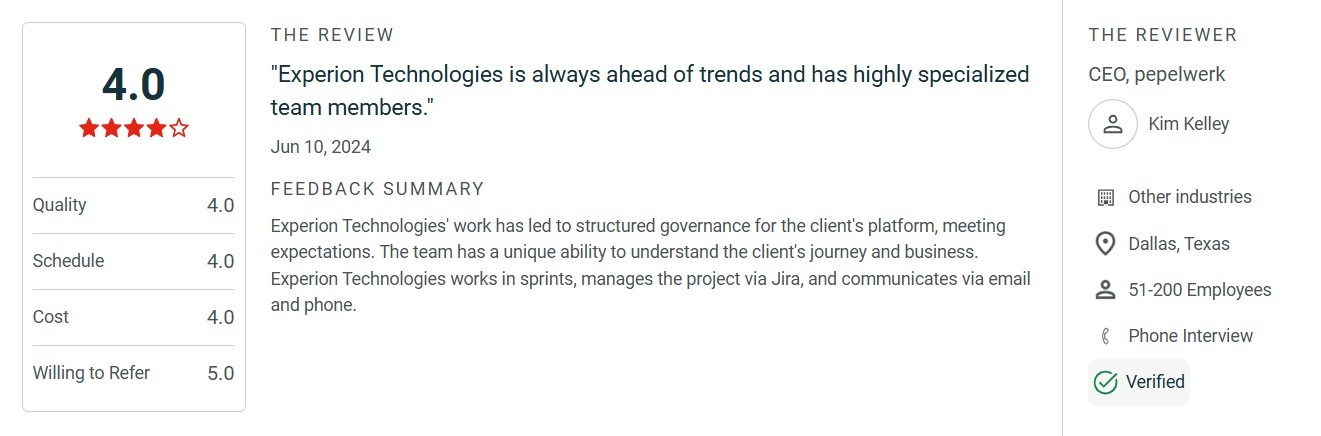
Pro: “Experion Technologies' work has led to structured governance for the client's platform, meeting expectations.” - Kim Kelley, Clutch

Con: “We had a couple of minor hiccups with testing and bugs, but these were resolved satisfactorily.” - Anonymous Executive at Conflict Armament Research, Clutch
Bottom Line
Experion Technologies works best for digital health companies that want one team to handle both design and engineering for a product. If you need extra developers instead of full product delivery, try Chetu.
10. Radixweb: Workflow-Driven Healthcare Software Development
What they do: Radixweb builds custom healthcare software and apps such as EHR modules, telehealth tools, hospital systems, billing platforms, and patient portals.
Who they serve: The team works with hospitals, clinics, medtech companies, and healthtech firms that need software tailored to their workflows.
I reviewed Radixweb’s healthcare projects to see how they plan custom software before development starts by submitting a request for a patient intake and referral system. The proposal included a phased build plan.
Teams often build apps step by step to keep patients safe and check that everything works. Plans can still change once clinicians use the system, so you need a clear way to handle changes when they arise.
Key Features
- Custom workflow solutions: Builds apps and modules around a healthcare organization’s real workflows.
- End-to-end development: Handles consulting, design, development, testing, deployment, and support for healthcare web and mobile software.
- Legacy system upgrades: Connects and modernizes older EHR, billing, and hospital systems while improving performance and data flow.
Pros
✅ Problem-first planning: Maps real workflow problems before development begins, which helps avoid scope issues later.
✅ Works with existing systems: Connects new software to current platforms instead of replacing them.
✅ Clear phased launch plans: Radixweb breaks projects into steps like MVP, pilot, and rollout to help teams manage risk and plan launches more easily.
Cons
❌ Harder to scale long term: Custom systems may require ongoing maintenance that becomes costly as the product grows.
❌ Ongoing updates take time: If your app often needs regular updates, you’ll most likely need more hands-on long-term maintenance.
What Real Users Say
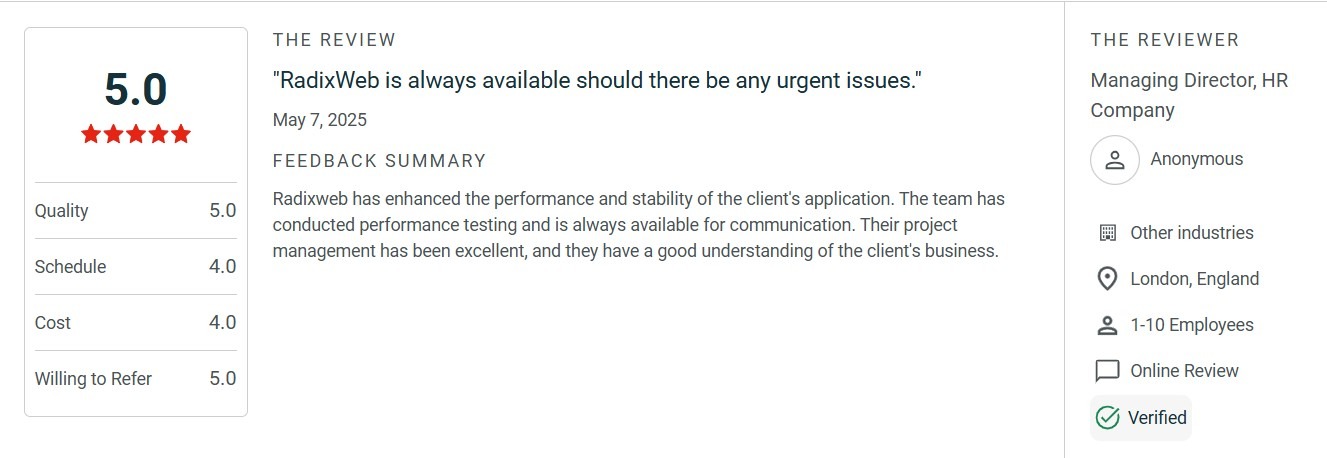
Pro: “Radixweb has enhanced the performance and stability of the client's application. The team has conducted performance testing and is always available for communication.” - Anonymous Managing Director, Clutch

Con: “While Radixweb is great in many areas, there could be improvements made in terms of project timelines and estimations. The deliverables were sometimes delayed due to unforeseen complications impacting the project schedule.” - Dipesh K., G2
Bottom Line
Radixweb is a strong choice when a mid-sized healthcare team needs custom software for how they actually work. It works well when no ready-made product fits their needs. If you need AI features or predictive analytics, try Brainvire.
My Final Verdict: Which Indian App Development Company Should You Choose?
Each of these top 10 companies offers different capabilities, from building large systems for multi-location clinics to creating small apps for solo practices. Here’s how to choose:
Choose TCS If You…
Have an organization that manages complex payer and provider systems across multiple regions and needs a long-term partner with the delivery capacity to match.
Choose Dev Technosys If You…
Have a team with no internal developers and need a vendor that handles compliance architecture and integrations.
Choose Wipro If You…
Have an organization that’s outgrowing fragmented vendor relationships and needs a single partner to own infrastructure, compliance, and platform operations.
Choose HCLTech If You…
Have a health system that carries stalled legacy infrastructure and needs a partner experienced in sequencing multi-year transformation programs.
Choose Persistent Systems If You…
Need a dedicated engineering team to maintain and update your infrastructure and apps.
Choose Appinventiv If You…
Have a validated product idea, a seed or Series A budget, and a vendor that takes full delivery accountability.
Choose Brainvire If You…
Require AI or automation to your healthcare apps.
Choose Chetu If You…
Have a defined codebase and tech team, but lack the specific technical headcount to maintain your app.
Choose Experion Technologies If You…
Need design and engineering delivered by a single team that owns the product from UX through deployment.
Choose Radixweb If You…
Need software built around a workflow that no off-the-shelf tool covers because software doesn't fit your actual process, and you need a custom build scoped to that specific gap.
Avoid Indian Healthcare App Development Companies If You…
Have a product still in the idea stage with no defined scope, or don’t want to spend between $50,000 to $200,000 for an app.
Develop a Healthcare App without Engineers Using Blaze
If you want to avoid the vetting, the time zone gaps, and the back-and-forth communication that come with hiring an Indian app development company, choose Blaze. It’s a no-code app builder that lets you create a customized healthcare app with a drag-and-drop editor, premade components, and tons of integrations. Here's why more healthcare organizations go with Blaze:
- Speed meets security: Build and deploy healthcare apps far faster than traditional development methods while keeping strong security practices in place.
- No-code ease: Blaze's drag-and-drop builder lets non-technical healthcare teams create patient management tools, dashboards, and automation workflows in days instead of the weeks or months a development company would take.
- Customizable enterprise workflows: Every healthcare organization operates differently. Blaze lets you design custom workflows for approvals, reporting, and data management that align with your specific clinical and administrative processes.
- Enterprise compliance: Blaze includes features such as audit logs and role-based permissions to support HIPAA-compliance requirements, though actual compliance depends on how each organization configures and uses the platform.
- Dedicated support: If you opt for the Enterprise Plan, Blaze provides hands-on onboarding and implementation support so your team can launch, test, and scale healthcare apps across departments.
Avoid shopping for developers and waiting on long development timelines. Schedule a free demo today and learn how you can create your own healthcare app with Blaze.
Frequently Asked Questions
What’s the Typical Cost for Healthcare App Development in India?
The typical cost to hire a custom healthcare app development company in India ranges between $18,000 and $55,000, depending on complexity and features. Simple apps with basic features may cost closer to $18,000 to $23,000, while feature-rich apps with advanced integrations like telemedicine, AI diagnostics, or data analytics can go up to $50,000 or more.
Why Should I Choose an Indian App Development Company?
You should choose an Indian app development company because they offer lower development costs and strong technical expertise. Development in India often costs 30–50% less than in Western countries. Many Indian developers also have experience building healthcare software that follows international standards such as HIPAA.
What Features Should a Healthcare App Include?
Most healthcare apps include basics like secure logins, patient scheduling tools, and medical records access. You should also consider telemedicine features for virtual appointments and data encryption to make sure the app meets healthcare standards.
Sources
1. U.S. Department of Health & Human Services. “Summary of the HIPAA Security Rule.” HHS.gov. https://www.hhs.gov/hipaa/for-professionals/security/laws-regulations/index.html
2. U.S. Department of Health & Human Services. “Security Rule Guidance Material.” HHS.gov. https://www.hhs.gov/hipaa/for-professionals/security/guidance/index.html
3. National Institutes of Health: StatPearls. “Health Insurance Portability and Accountability Act (HIPAA) Compliance.” NCBI. https://www.ncbi.nlm.nih.gov/books/NBK500019/
The Secure No-Code & AI Platform
Supercharge your team's operations and performance with better apps and tools.
Create custom apps fast
Secure & HIPAA compliant
Streamline complex workflows

The Secure No-Code Platform
Build apps with best-in-class security.
Related Articles
Discover related guides on healthcare no-code development, HIPAA compliance, security, integrations, and launching apps faster.
.png)
10 Best Replit Alternatives: Tested for Developer Tasks (2026)
After comparing 10 Replit alternatives, I found differences in compliance features and needed coding skills. Discover platforms and prices to find the best fit.
%20(1).png)
Healthcare Claims Automation: How It Works (2026)
Healthcare claims automation connects systems to reduce repetitive work. Explore the 9 workflow stages that show how eligibility, validation, and payments move.
%20(1).png)
8 Healthcare Dashboard Examples (2026)
Explore healthcare dashboard examples for hospital operations, revenue, and compliance. Discover what each dashboard tracks and how to build one.